Sunday, July 22, 2007

Focal neurological symptoms

A focal neurologic symptom is a problem that affects either:
  • A specific location - such as the left face, right farm or even just a small area such as the tongue
  • A specific function - for example, speech may be affected, but not the ability to write
The problem occurs in the brain or nervous system. The type, location, and severity of the change can indicate the area of the brain or nervous system that is affected.

In contrast, a non-focal problem is NOT specific - such as a general loss of consciousness.


References:
  • MedLine Plus Medical Encyclopedia, http://www.nlm.nih.gov/medlineplus/ency/article/003191.htm

Asthma Hx

Things you need to ask someone with asthma:
  • Sx: wheeze, dyspnoea, cough, disturbed sleep
  • Exercise - quantify distance to breathlessness
  • Days per week off work or school
  • Diurnal variation
  • Triggers - RTIs, cold, exercise, pets, emotions, drugs
  • How & when they monitor their asthma e.g. peak flow meter
  • Use of preventers and inhalers. Has there been any changes?
  • For elderly people, ask if they've had Fluvax and Pneumovax vaccines (major RF for infective exacerbation)
  • Any other atopic diseases like eczema, hay fever, allergy
  • Previous attacks or hospitalisations
  • Family history of asthma
References:
  • http://www.aippg.net/forum/viewtopic.php?p=55254

T4 during infection

Metabolism of thyroid hormones is accelerated during acute infection in man and in experimental animals. The mechanisms for this is uncertain, but activated leukocytes of the infected host have been implicated as potentially important sites of hormone degradation.

Apparently T4 can go up in infection similar to an acute pahse reactant - but I couldn't find anything on the net really backing this up!!


References:
  • DeRubertis, Accelerated host metabolism of L-thyroxine during acute infection, Journal of Clinical Endocrinology & Metabolism, Vol 40, 589-600

Nilstat

Actions

Anti-fungal.

Indications

Treatment of candida.

References:
  • AMH

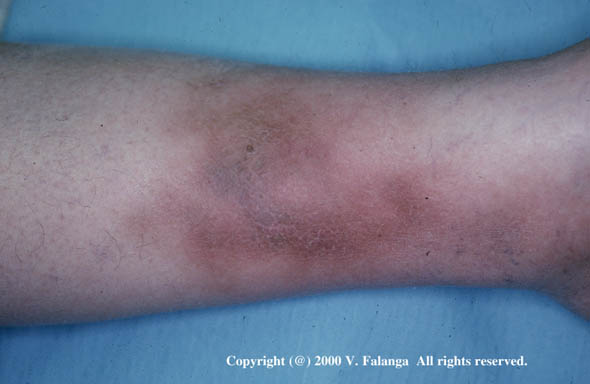
Lipodermatosclerosis (LDS)

  • LDS literally means "scarring of the skin and fat" and is a slow process that occurs over a number of years.
  • Occurs in patients with long-standing venous disease resulting in chronic venous insufficiency.
  • Affects the skin just above the ankle, usually on the inside surface.
  • Over time the skin becomes brown, smooth, tight and often painful.
  • The precise mechanism of LDS is not fully understood, but we do know that it is caused by an excessively high venous pressure in the subcutaneous veins in the lower leg.
References:
  • http://www.simondodds.com/Venous/LDS.htm
  • http://www.bu.edu/woundbiotech/wounds/UncommonWounds%20Gallery/pages/19..htm

Chronic Venous Insufficiency (CVI)

Symptoms

  • Varicose veins
  • Ulceration or skin breakdown
  • Lipodermatosclerosis
  • Reddened or discolored skin on the leg
  • Oedema

Risk factors

  • Heredity
  • Obesity
  • Pregnancy
  • Sedentary lifestyle
  • Smoking
  • Jobs requiring long periods of standing or sitting in one place
  • Age and sex (women in their 50s are more prone to developing CVI)
  • Incompetent valves
  • previous DVT

Pathophysiology

  • Increased venous pressure transcends the venules to the capillaries, impeding flow.

  • Low-flow states within the capillaries cause leukocyte trapping.

  • Trapped leukocytes release proteolytic enzymes and oxygen free radicals, which damage capillary basement membranes.

  • Plasma proteins,such as fibrinogen, leak into the surrounding tissues, forming a fibrin cuff.

  • Interstitial fibrin and resultant oedema decrease oxygen delivery to the tissues, resulting in local hypoxia.

  • Inflammation and tissue loss result. Ulceration may occur.

Management

  • Leg elevation
  • Elastic compression therapy - especially with older patients you need to ensure they are actually able to put the compression stockings on for themselves.
  • Sclerotherapy - chemically scarring the veins from the inside out so that they can then no longer fill with blood. Blood that would normally return to the heart through these veins returns to the heart through others. The body eventually absorbs the veins that received the injection.
  • Vein stripping
  • Deep vein surgery - note that surgical treatment is reserved for those with discomfort or ulcers refractory to medical management.
  • Valve repair

Sunday, July 15, 2007